
About Me
Hello👋! My name is Yoonsu Kim, and I am a Ph.D. student of School of Computing at KAIST.
I am working with Prof. Juho Kim at KIXLAB (KAIST Interaction Lab), and I graduated from KAIST AI with a Master’s Degree.
My research is in Human-AI Interaction (HAI). I am particularly interested in understanding the difficulties users face when interacting with AI, and designing human-centered AI systems that amplify people’s abilities.
I have been focused on designing cognitive collaboration with AI, along three aspects: 🎯 intent alignment, 🧩 context sharing, and 🤝 deliberate delegation for ensuring human agency.
I am also interested in 🎓 AI for education and learning at scale, such as diagnosing students’ problem-solving and cognitive skills with LLMs, and in 🔍 making AI behavior legible to people, such as explaining why vision models fail in natural language.
Through my work, I aim to contribute to helping people better utilize new technology 🌏❤️.
News
- Nov. 2026 🎉 Our paper MathCog has been accepted to LAK 2027!
- Nov. 2026 🇺🇸 Attending UIST 2026 in Detroit to present and demo Contexty! Would love to connect 🫶
- Aug. 2026 🎉 Our paper Hypothesize and Verify: Natural-Language Explanations of Vision Model Errors has been accepted to TMLR!
- Jul. 2026 🇰🇷 Attending ICML 2026 in Seoul! Feel free to say hi if you're around 👋
- Jun. 2026 🎉 Our paper Contexty: Capturing and Organizing In-situ Thoughts for Context-Aware AI Support has been accepted to UIST 2026!
- Jun. 2026 🌟 Attending FoL 2026 in Seoul as an Organizing Committee member! Come say hi if you're there 👋
Publications
Preprints
-
Under Review
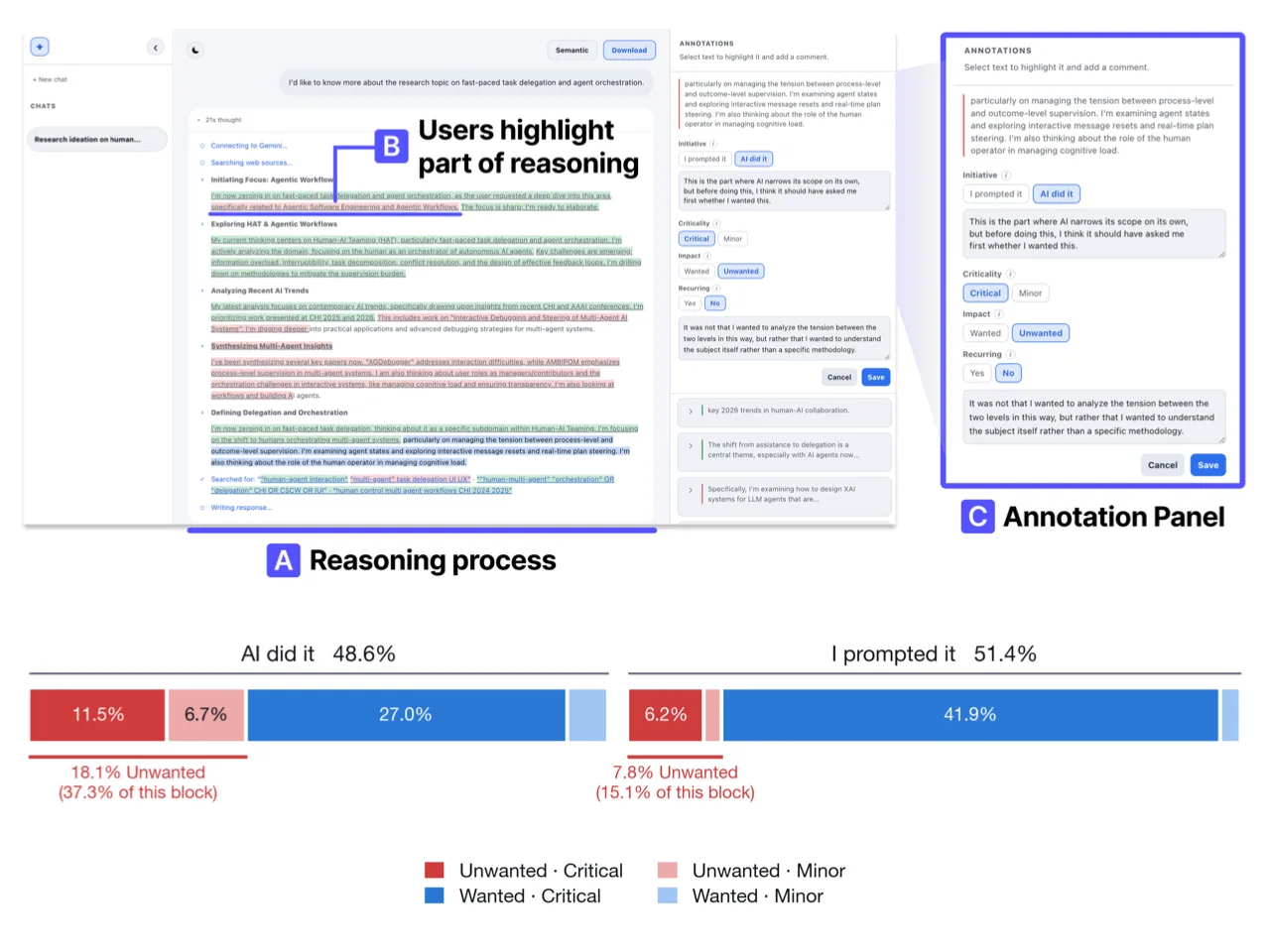
What work do people intend to delegate—and what does the AI take on by itself? From 992 annotations of LLM reasoning steps by 24 users, we found about half (48.6%) were AI-initiated, and propose ways to make delegation more deliberate, with AI-initiated decisions that users can inspect and revise.
Large language models (LLMs) often perform intermediate cognitive work while carrying out users' requests, yet it remains unclear which parts users intended to delegate and how they wanted to remain involved. This matters because consequential choices may go unnoticed, limiting users' ability to steer the process, while reviewing every step would make delegation burdensome. We examined this with 24 LLM users across three knowledge-work tasks, collecting 992 retrospective annotations of reasoning steps. From this, we developed taxonomies of LLM cognitive work, delegation enactment, and desired delegation protocols at the reasoning-step level. Our analysis revealed that participants viewed about half of all steps (48.6%) as AI-initiated, meaning the AI took on work they had not requested. Desired involvement varied with cognitive work and delegation enactment, even when contributions matched participants' intent. We propose design implications and sketches for supporting more deliberate cognitive delegation through flexible protocols and inspectable, revisable AI-initiated decisions.
-
Under Review
Helping teachers locate reasoning breakdowns with stage-specific questions and rubrics. STEP, co-designed with math education experts, breaks problem-solving into four stages and eight sub-skills; in a classroom study with 5 teachers and 64 students, STEPwise helped pinpoint where students' reasoning failed.
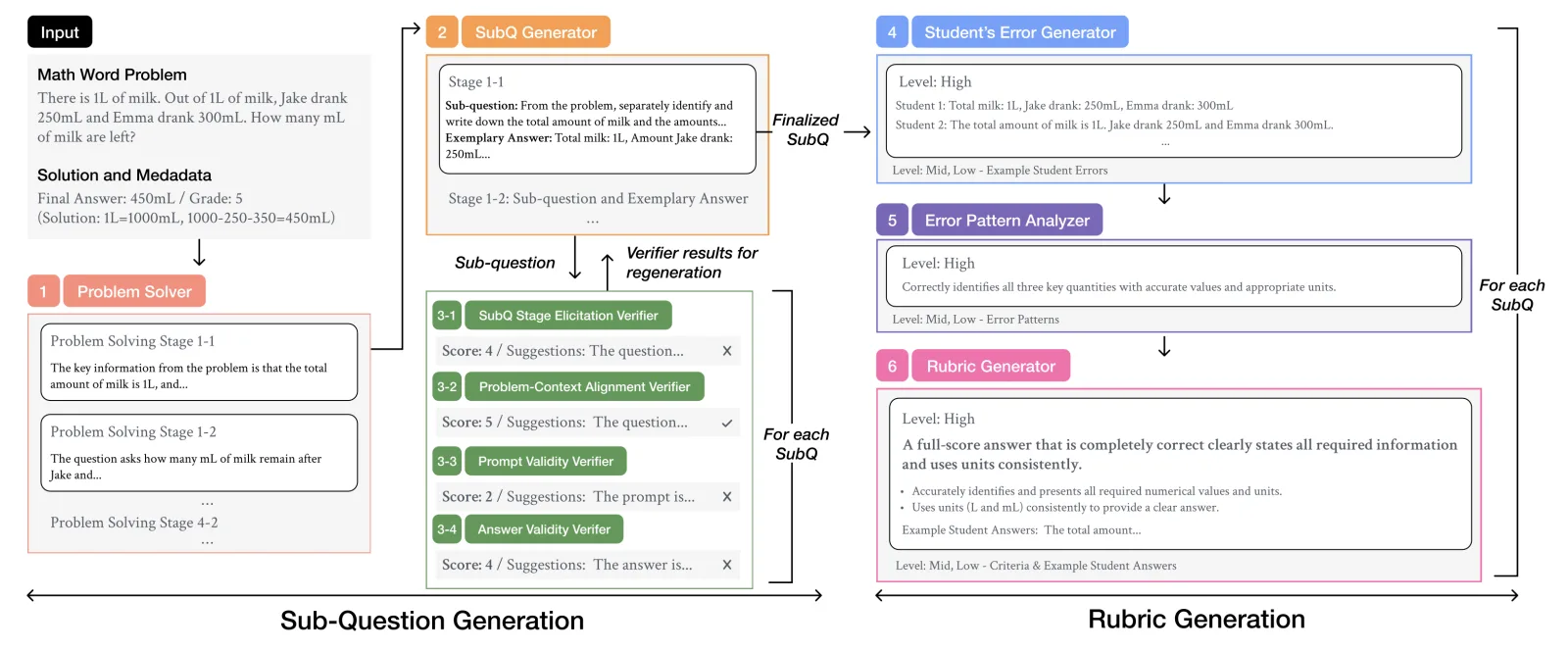
Problem-solving is central to mathematics education. However, diagnosing where students' reasoning breaks down requires individualized probing and consistent criteria that teachers cannot sustain at classroom scale. We introduce STEP (STage-based Evaluation of Problem-solving skills), co-designed with six mathematics education experts, which operationalizes problem-solving as four stages and eight diagnostic sub-skills. By specifying what evidence to elicit and assess at each stage, STEP enables an LLM pipeline to generate stage-specific questions and rubrics for any math word problem, reducing the manual design of diagnostic materials. An expert review (N=8) assessed the pedagogical validity of the generated materials and informed STEPwise, a teacher-in-the-loop system for diagnostic material generation and process-level assessment. In a classroom study with 5 teachers and 64 students, STEPwise helped teachers and students locate reasoning breakdowns and supported students in reflecting on their reasoning. Together, STEP and STEPwise offer a structured approach to fine-grained diagnosis at classroom scale.
-
Under Review
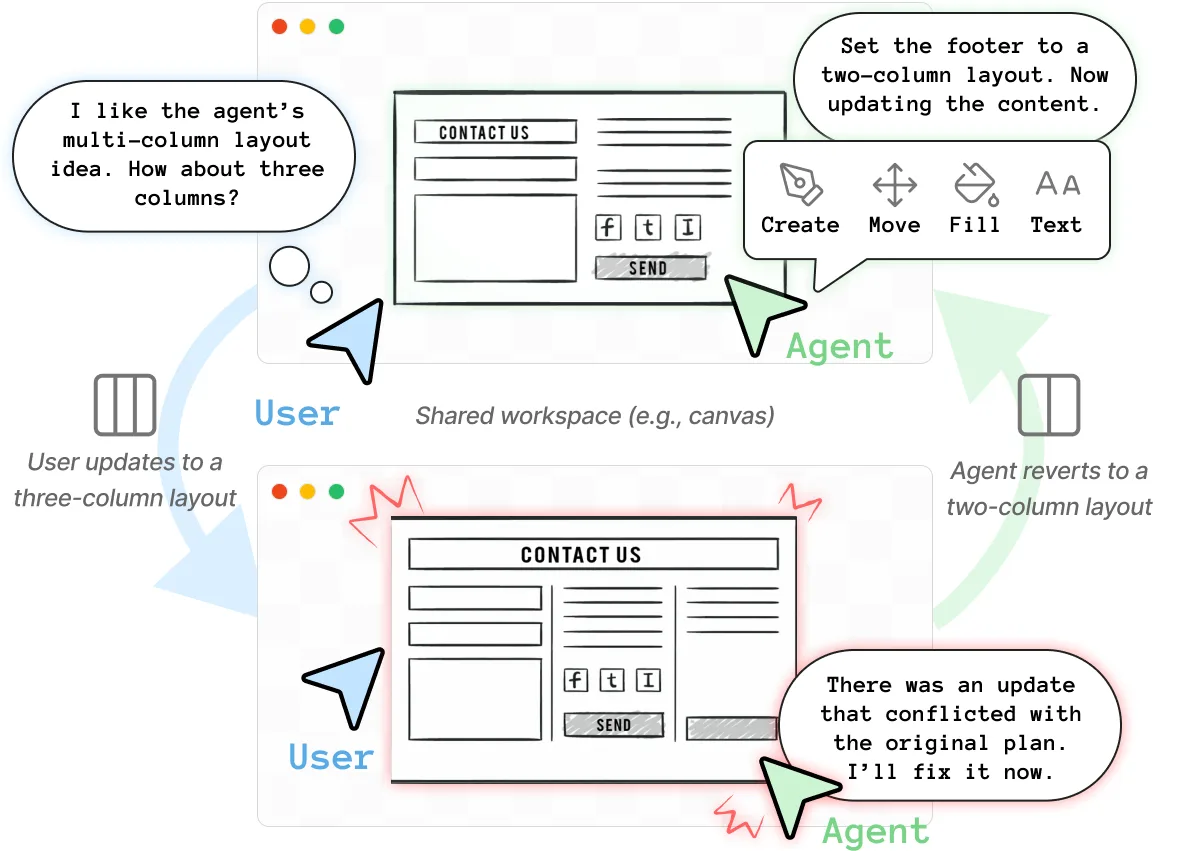
When people and an AI agent work on the same canvas at once, how do they divide the work? In two studies with professional designers, users jumped in during a third of turns (33.7%) to add new ideas or take over subtasks, but held back when the agent misread their edits, which led to a decision model for concurrent collaboration.
Shared co-creative workspaces allow users to contribute while agents execute. Yet how users adjust their participation as their work and the agent's execution shape one another remains less understood. We conducted two design probe studies with professional designers. In Study 1 (N=10), participants identified opportunities to contribute by observing the agent's progress, but avoided intervention when the agent misinterpreted their edits. Therefore, we developed CLEO, a second probe that tracks user actions and selectively updates its plan. In Study 2 (N=12), we analyzed 255 interaction turns and stimulated recall interviews, identifying five action categories, ten codes, six triggers, and four enabling factors. Participants engaged in concurrent interaction during 33.73% of turns, expressing newly recognized design ideas or preferences through edits and changing the division of work by completing pending subtasks or independently developing copies of unfinished outputs. We present a decision model and five design implications for concurrent human-agent collaboration.
Conferences and Journal Papers
-
LAKAccepted to LAK 2027
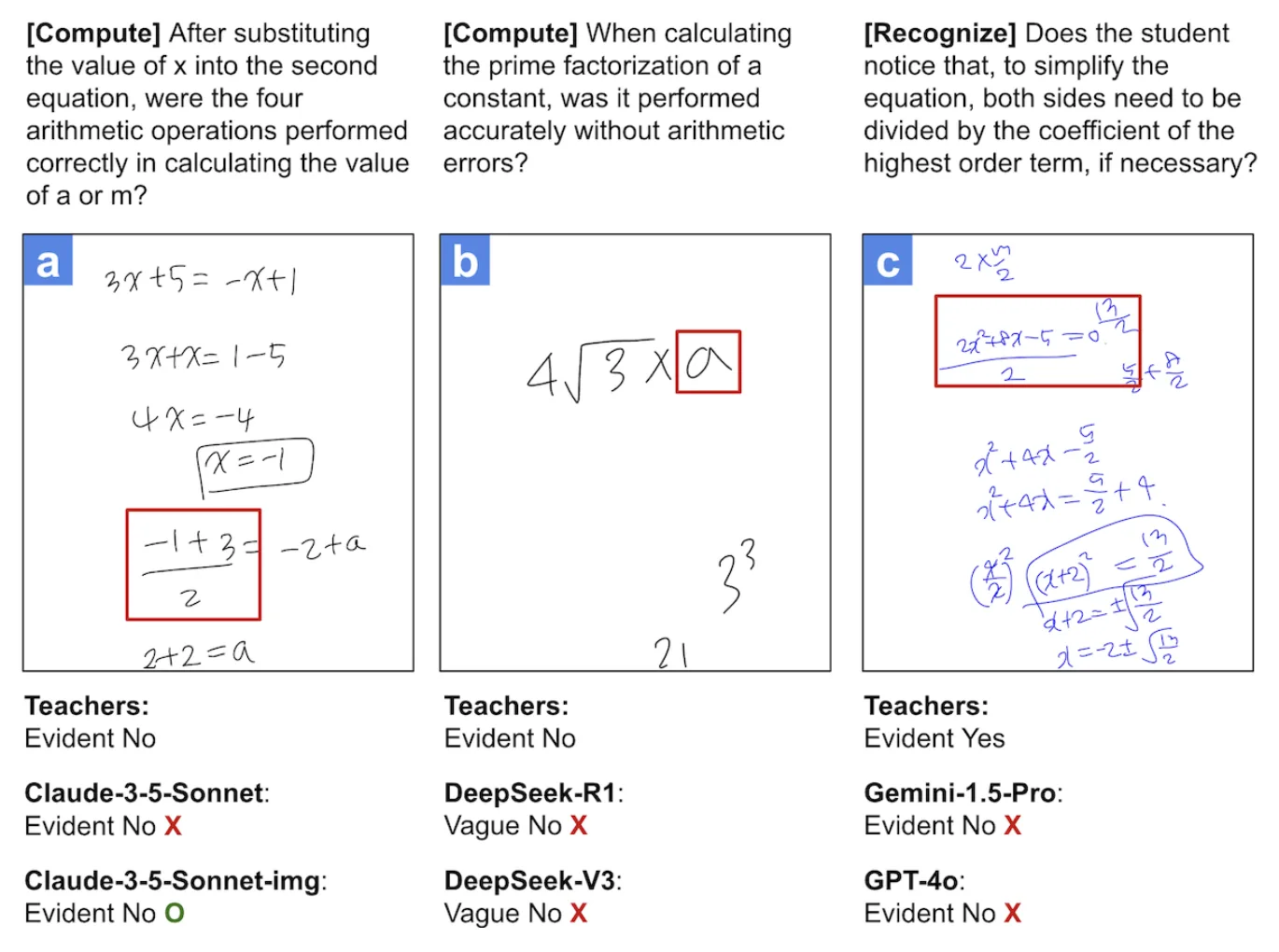
We built MathCog, a benchmark of 3,036 teacher-annotated verdicts on students' handwritten math, and tested 18 LLMs. All scored below 0.5 F1 and struggled most with vague evidence, often treating vague cues as clear ones, overthinking, and hallucinating evidence.
Students' handwritten math work provides a rich resource for diagnosing cognitive skills, as it captures intermediate reasoning beyond final answers. We investigate how current large language models (LLMs) perform in diagnosing cognitive skills from such work. However, student responses vary widely, often omitting steps or providing only vague, contextually implicit evidence. Despite recent advances in LLMs' multimodal and reasoning capabilities, their performance under such conditions remains underexplored. To address this gap, we constructed MathCog, a benchmark dataset containing 3,036 diagnostic verdicts across 639 student responses to 110 math problems, annotated by teachers using TIMSS-grounded cognitive skill checklists with evidential strength labels (Evident/Vague). Evaluating 18 LLMs, we find that (1) all models underperform (F1 < 0.5) regardless of capability, and (2) performance degrades sharply under vague evidence. Error analysis reveals systematic patterns: models frequently misattribute Vague evidence as Evident, overthink minimal cues, and hallucinate nonexistent evidence. We discuss implications for evidence-aware, teacher-in-the-loop designs for LLM-based cognitive diagnosis in educational settings.
-
TMLRAccepted to TMLR
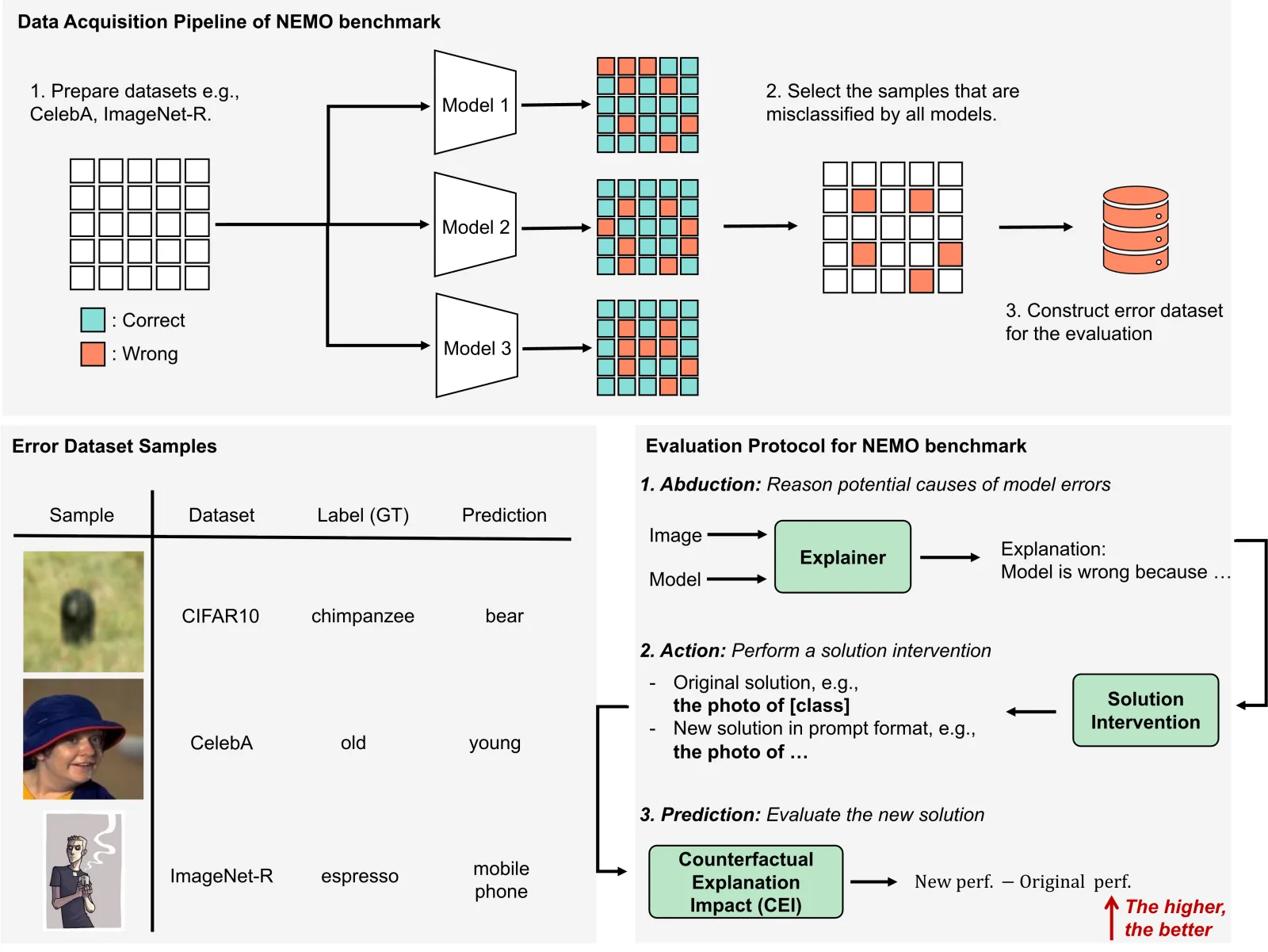
When a vision classifier gets an image wrong, SciTX explains why like a scientist: it hypothesizes candidate causes and verifies each with a counterfactual image or prompt edit. On NEMO, our benchmark of 1,200 misclassified images, it beats retrieval- and MLLM-based baselines, and 30 AI practitioners ranked it first on all five helpfulness dimensions.
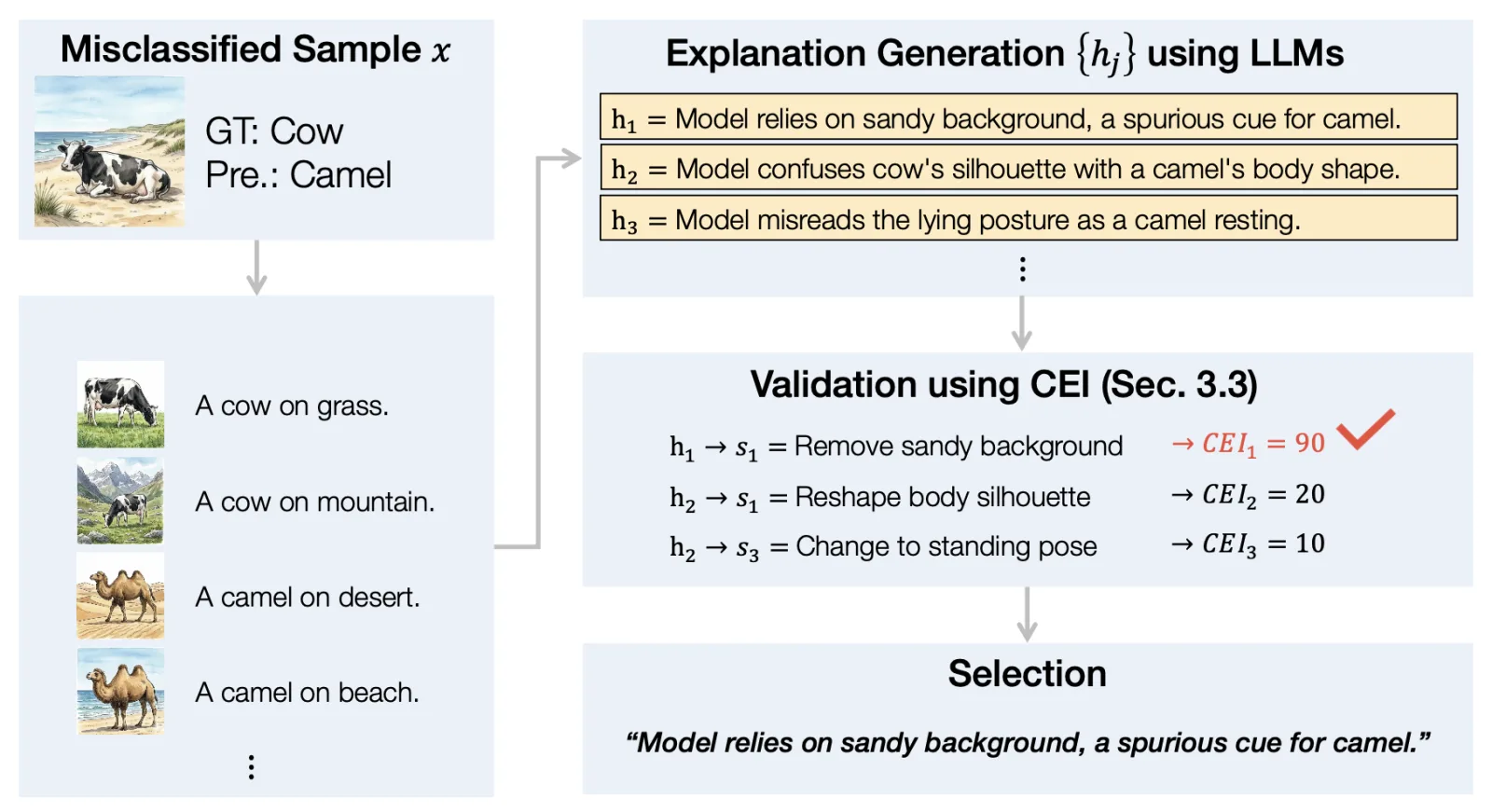
LLM- and agent-based assistants now bring non-experts into direct ML work, where they probe model failures by asking the assistant in plain language. When such a classifier misclassifies an image, the non-expert needs a reliable account of why. Two obstacles stand in the way. No benchmark scores free-form natural-language explanations of such errors, and existing retrieval-based methods can only return sentences from a fixed error corpus. We close both. NEMO is a task and benchmark of 1,200 misclassified images across ImageNet-R, ObjectNet, and ImageNet-D, each varying along a controlled factor (artistic style, viewpoint, low-level attributes), scored by an LLM-as-a-Judge (LLM Match) protocol that asks whether the explanation describes that factor. SciTX is a generation-based method that emulates the scientific method: retrieve observations, hypothesize candidate causes, verify each with a counterfactual intervention, and retain the hypothesis whose intervention shifts the model's prediction farthest toward the ground-truth class. The shift is captured by our Counterfactual Explanation Impact (CEI), which serves as both SciTX's selection signal and a complementary evaluation metric. On NEMO, SciTX outperforms retrieval-based and MLLM-augmented baselines on both LLM Match and CEI, and 30 AI practitioners rank it first across all five helpfulness dimensions, including factuality, specificity, and actionability.
-
UISTAccepted to UIST 2026
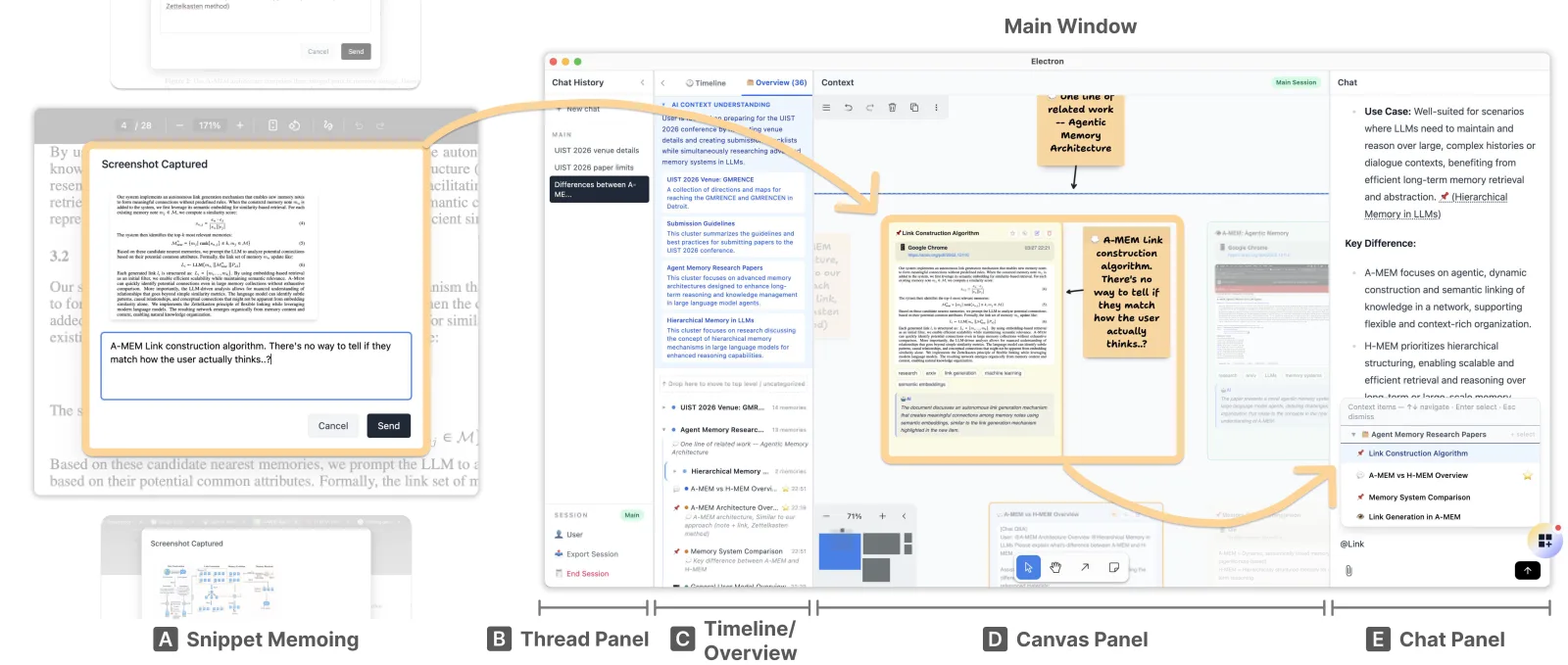
AI rarely sees the thinking behind people's work. Contexty captures in-situ thought snippets and lets users organize, inspect, and revise them as AI context; in a study (N=12) it improved task awareness and sense of control, and participants preferred snippet-grounded AI responses 78.1% of the time.
During complex knowledge work, people engage in iterative sensemaking: interpreting information, connecting ideas, and refining their understanding. Yet in current human-AI collaboration, these cognitive processes are difficult to share and organize for AI. They arise in situ and are rarely captured without interrupting the task, and even when expressed, remain scattered or reduced to system-generated summaries that fail to reflect users' cognitive processes. We address this challenge by enabling AI context that is grounded in users' cognitive traces and can be directly inspected and revised by the user. We first explore this through a probe system that supports in-situ snippet memoing, allowing users to easily share their cognitive moves. Our study (N=10) highlights the value of capturing such context and the challenge of organizing it once accumulated. We then present Contexty, which supports users in inspecting and refining these contexts to better reflect their understanding of the task. Our evaluation (N=12) showed that Contexty improved task awareness, thought structuring, and users' sense of authorship and control, with participants preferring snippet-grounded AI responses over non-grounded ones (78.1%). We discuss how capturing and organizing users' cognitive context enables AI as a context-aware collaborator while preserving user agency.
-
DISDIS 2026
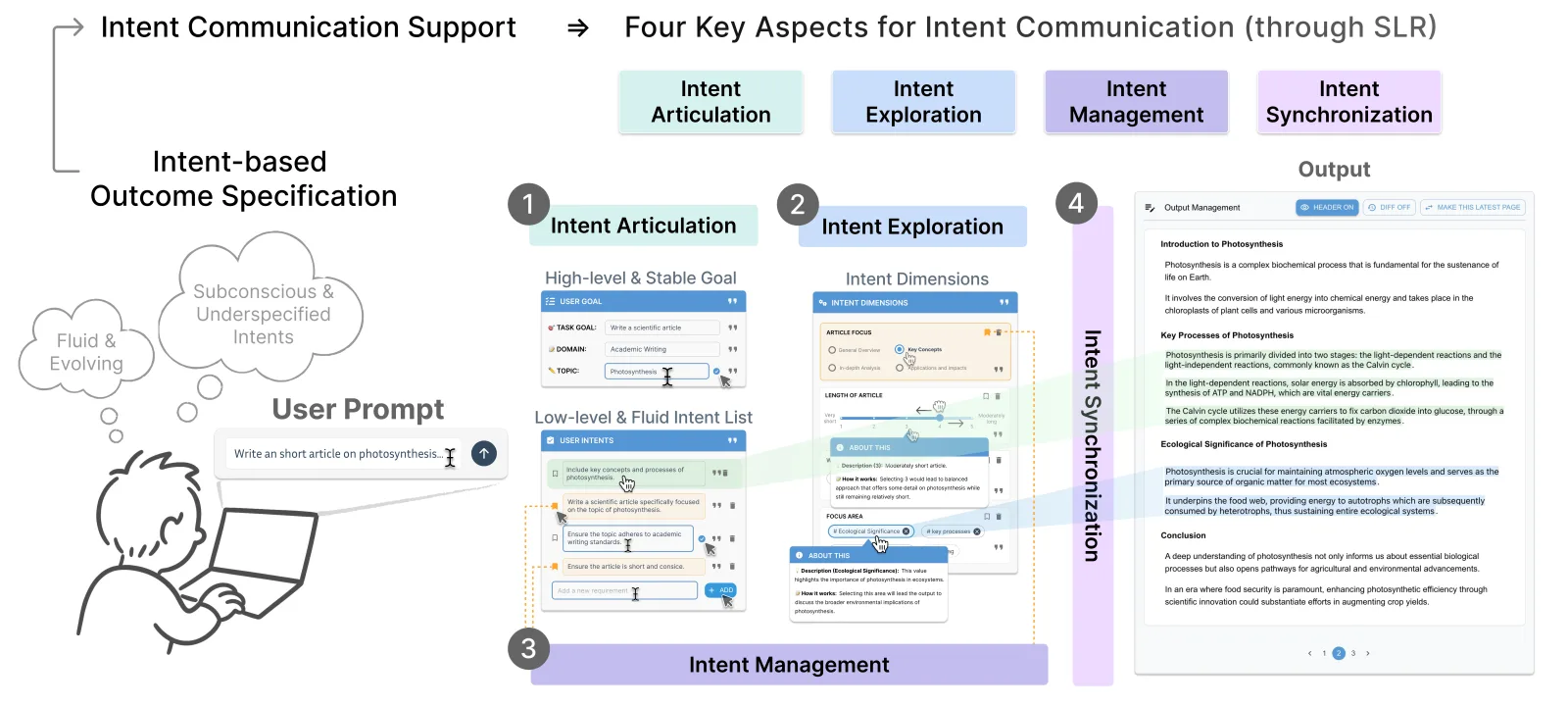
From a review of 46 HCI papers, we identify four aspects of communicating intent to generative AI: articulation, exploration, management, and synchronization. A study (N=12) with IntentFlow, a probe supporting all four, showed this reduces cognitive effort and improves users' control and understanding of how outputs match their intent.
Generative AI shifts interaction toward intent-based outcome specification, despite user intents being inherently vague, fluid, and evolving. While a growing body of HCI research has proposed diverse interaction techniques to support this process, there is limited understanding of what the key aspects of intent communication are and how they interplay to shape users' workflows. To bridge this gap, we first conduct a systematic literature review of 46 HCI papers and identify four core aspects of intent communication support: intent articulation, exploration, management, and synchronization. To investigate how these aspects interplay in practice, we developed IntentFlow, a research probe that embodies all four aspects for a writing task, and conducted a comparative study (N=12). Our action-level behavioral analysis reveals that comprehensive support enables verification-driven refinement and progressive intent curation, reduces cognitive effort, and improves users' sense of control and understanding of intent-output alignment. We conclude with design implications for building generative AI systems that support intent communication as a dynamic, iterative process.
-
IUIIUI 2024
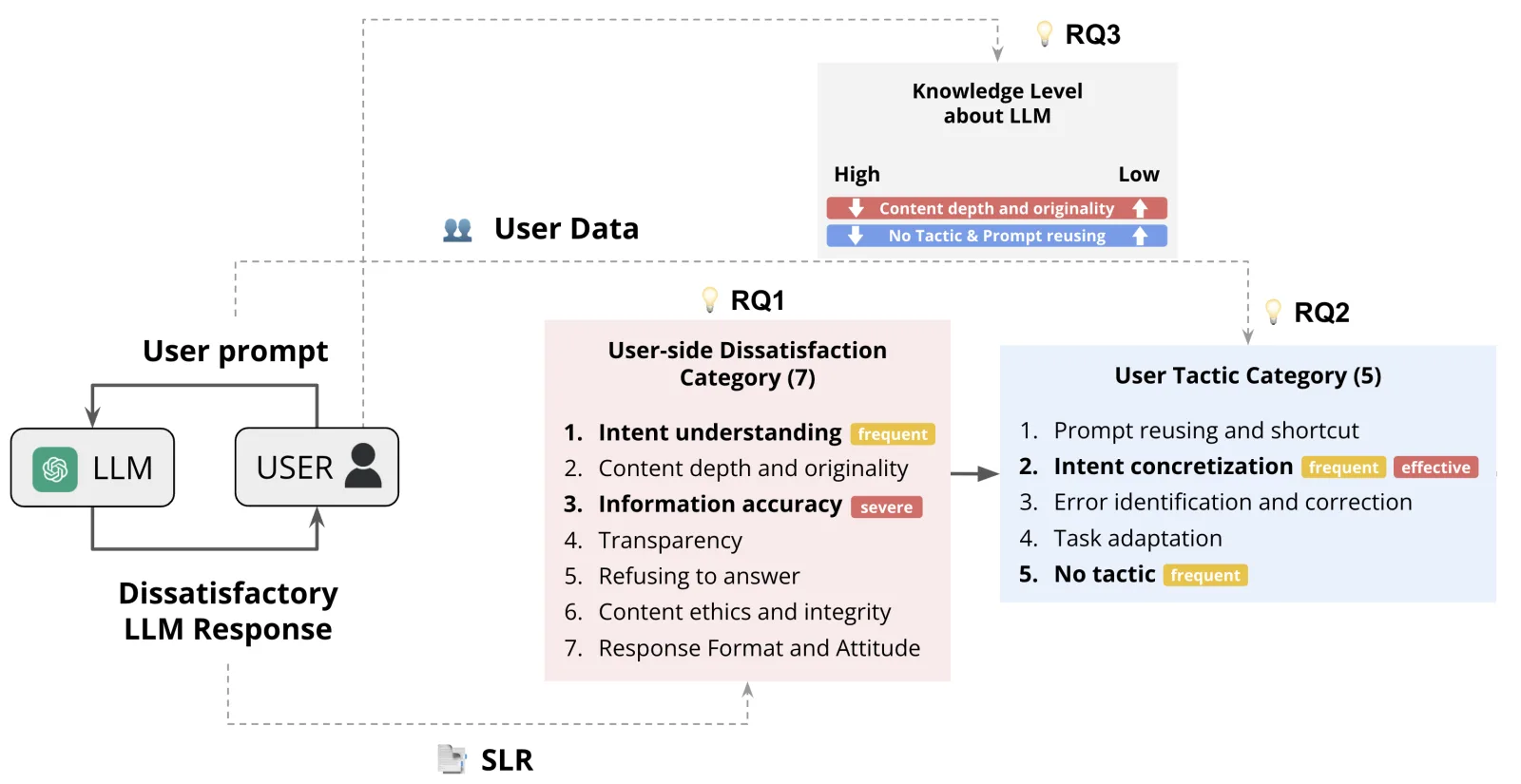
We collected 511 dissatisfying ChatGPT responses from 107 users. Failing to grasp user intent was the most frequent problem and inaccuracy the most severe; 72% of dissatisfaction went unresolved, and users with less LLM knowledge faced more accuracy issues yet put in less effort to fix them.
Large language models (LLMs) with chat-based capabilities, such as ChatGPT, are widely used in various workflows. However, due to a limited understanding of these large-scale models, users struggle to use this technology and experience different kinds of dissatisfaction. Researchers have introduced several methods, such as prompt engineering, to improve model responses. However, they focus on enhancing the model's performance in specific tasks, and little has been investigated on how to deal with the user dissatisfaction resulting from the model's responses. Therefore, with ChatGPT as the case study, we examine users' dissatisfaction along with their strategies to address the dissatisfaction. After organizing users' dissatisfaction with LLM into seven categories based on a literature review, we collected 511 instances of dissatisfactory ChatGPT responses from 107 users and their detailed recollections of dissatisfactory experiences, which we released as a publicly accessible dataset. Our analysis reveals that users most frequently experience dissatisfaction when ChatGPT fails to grasp their intentions, while they rate the severity of dissatisfaction related to accuracy the highest. We also identified four tactics users employ to address their dissatisfaction and their effectiveness. We found that users often do not use any tactics to address their dissatisfaction, and even when using tactics, 72% of dissatisfaction remained unresolved. Moreover, we found that users with low knowledge of LLMs tend to face more dissatisfaction on accuracy while they often put minimal effort in addressing dissatisfaction. Based on these findings, we propose design implications for minimizing user dissatisfaction and enhancing the usability of chat-based LLM.
-
IMWUTIMWUT 2023
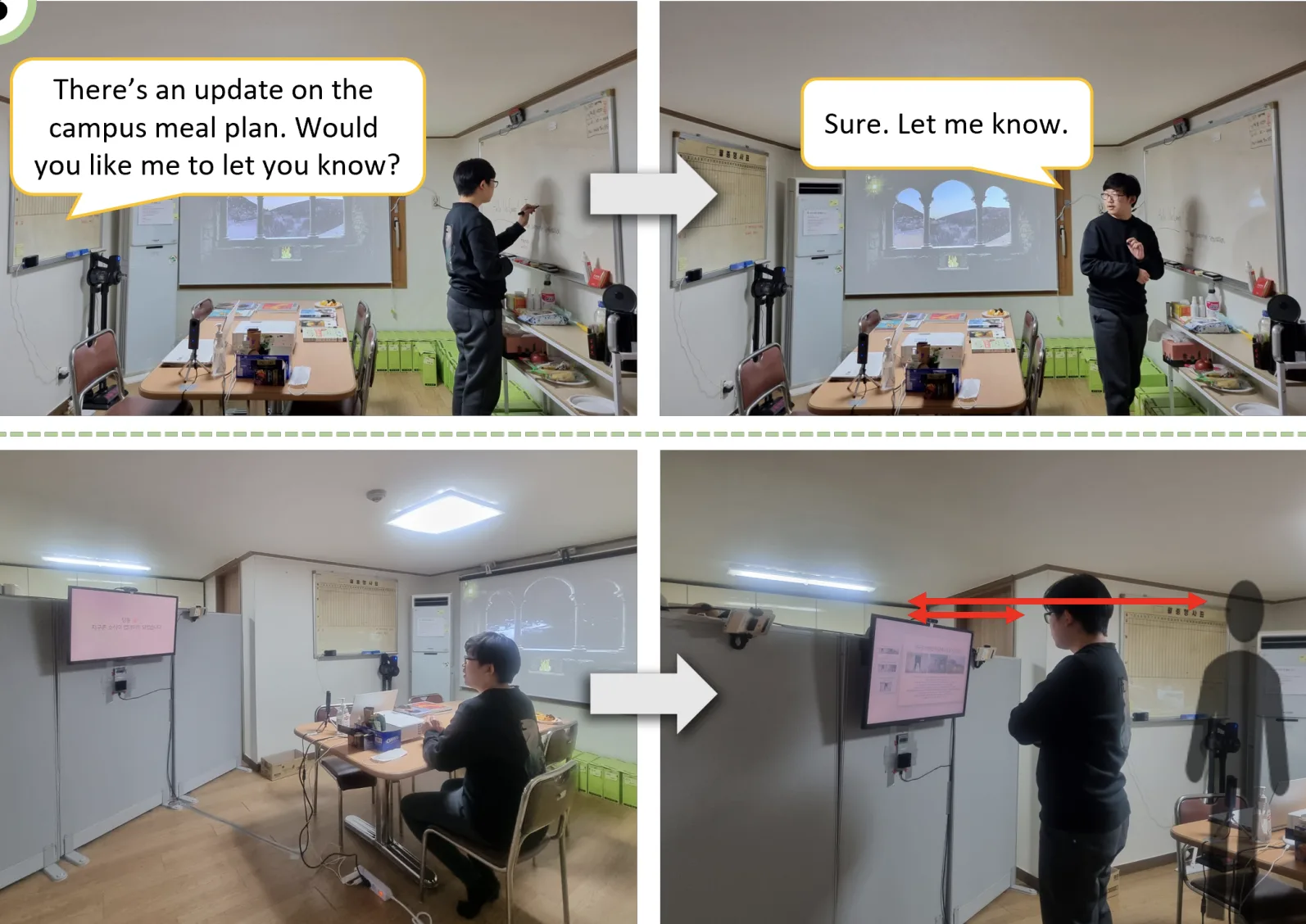
Instead of passively watching people, what if home AI sensors nudged residents into conditions they can see best, such as facing the camera? We built a taxonomy of such actuations, deployed them in a sensor-rich home with 20 participants, and showed substantially better inferences than passive sensing.
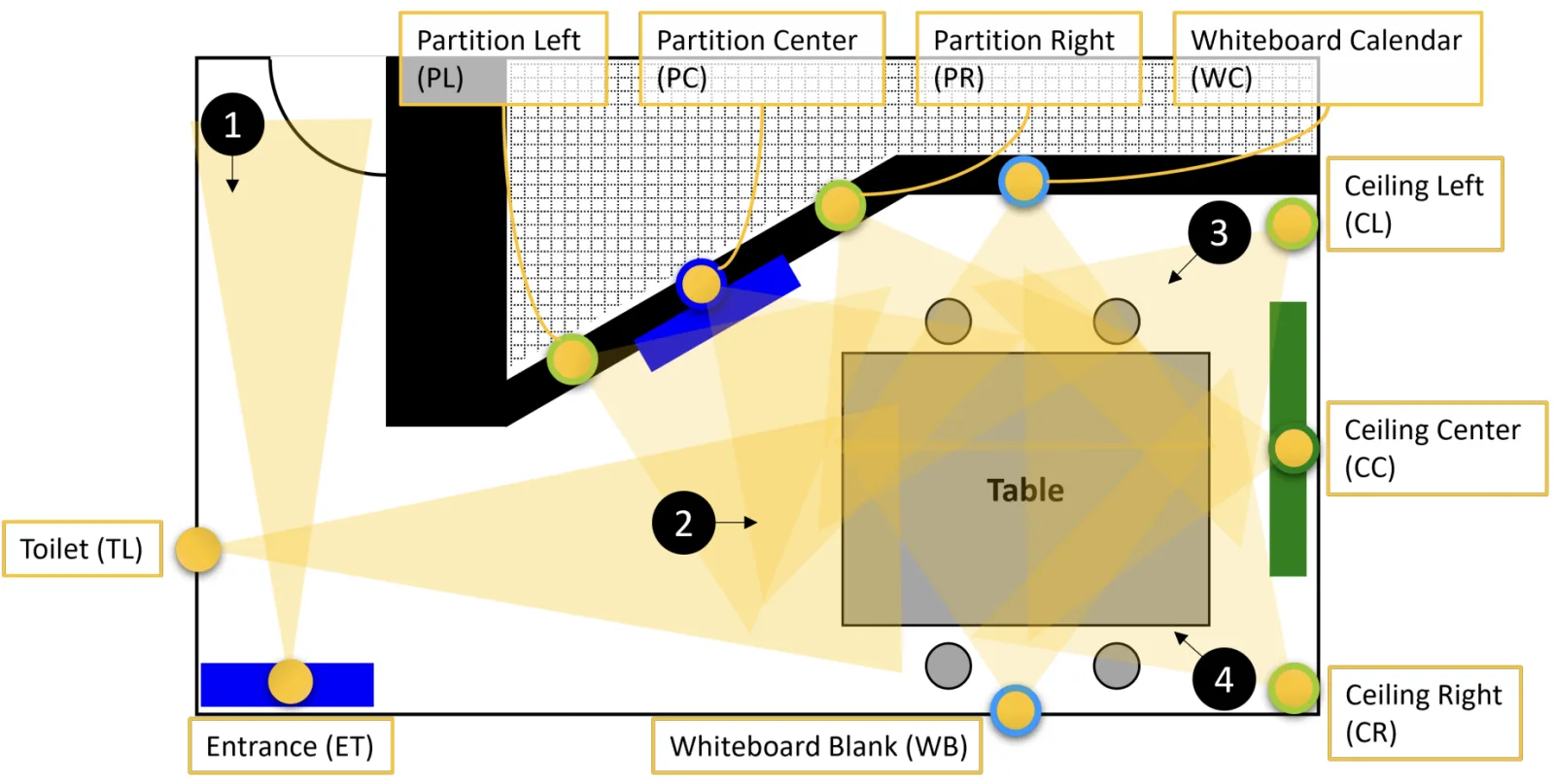
Imagine a near-future smart home. Home-embedded visual AI sensors continuously monitor the resident, inferring her activities and internal states that enable higher-level services. Here, as home-embedded sensors passively monitor a free person, good inferences happen randomly. The inferences' confidence highly depends on how congruent her momentary conditions are to the conditions favored by the AI models, e.g., front-facing or unobstructed. We envision new strategies of AI-to-Human Actuation (AHA) that empower the sensory AIs with proactive actuation so that they induce the person's conditions to be more favorable to the AIs. In this light, we explore the initial feasibility and efficacy of AHA in the context of home-embedded visual AIs. We build a taxonomy of actuations that could be issued to home residents to benefit visual AIs. We deploy AHA in an actual home rich in sensors and interactive devices. With 20 participants, we comprehensively study their experiences with proactive actuation blended with their usual home routines. We also demonstrate the substantially improved inferences of the actuation-empowered AIs over the passive sensing baseline. This paper sets forth an initial step towards interweaving human-targeted AIs and proactive actuation to yield more chances for high-confidence inferences without sophisticating the model, in order to improve robustness against unfavorable conditions.
Posters, Demos, Workshop Papers
-
ICMLICML 2026 Workshop on AI4GOOD
When a vision classifier errs, users need to know why. NEMO is a benchmark for free-form explanations of vision model errors with an LLM-as-a-Judge protocol, and our method SciTX observes, hypothesizes, and tests counterfactual interventions, outperforming baselines and ranking first with AI practitioners.
With the rise of agentic LLM systems, non-experts increasingly interact with vision classifiers through natural language. When a classifier misclassifies an image, users need a faithful account of why. Such explanations help users diagnose failure modes and debug the model. Progress on this need is blocked by two gaps. First, no benchmark evaluates free-form natural-language explanations of vision model errors. Second, existing retrieval-based methods are limited to a fixed corpus of error sentences and cannot describe failure modes outside it. We address both gaps. We introduce NEMO, a task and benchmark, paired with an LLM-as-a-Judge protocol that scores explanations for whether they describe the failure factor. We then propose SciTX, a generation-based method powered by Multimodal Large Language Models (MLLMs). SciTX is composed of a four-stage pipeline: observation, hypothesis, experiment, and conclusion. The pipeline retrieves contrastive observations, generates candidate hypotheses, validates each via a counterfactual intervention, and selects the hypothesis whose intervention shifts the model's prediction most toward the ground-truth class. SciTX outperforms retrieval-based and MLLM-augmented baselines. A human study with AI practitioners also ranks SciTX first.
-
AIEDAIED 2026 Interactive Events Track
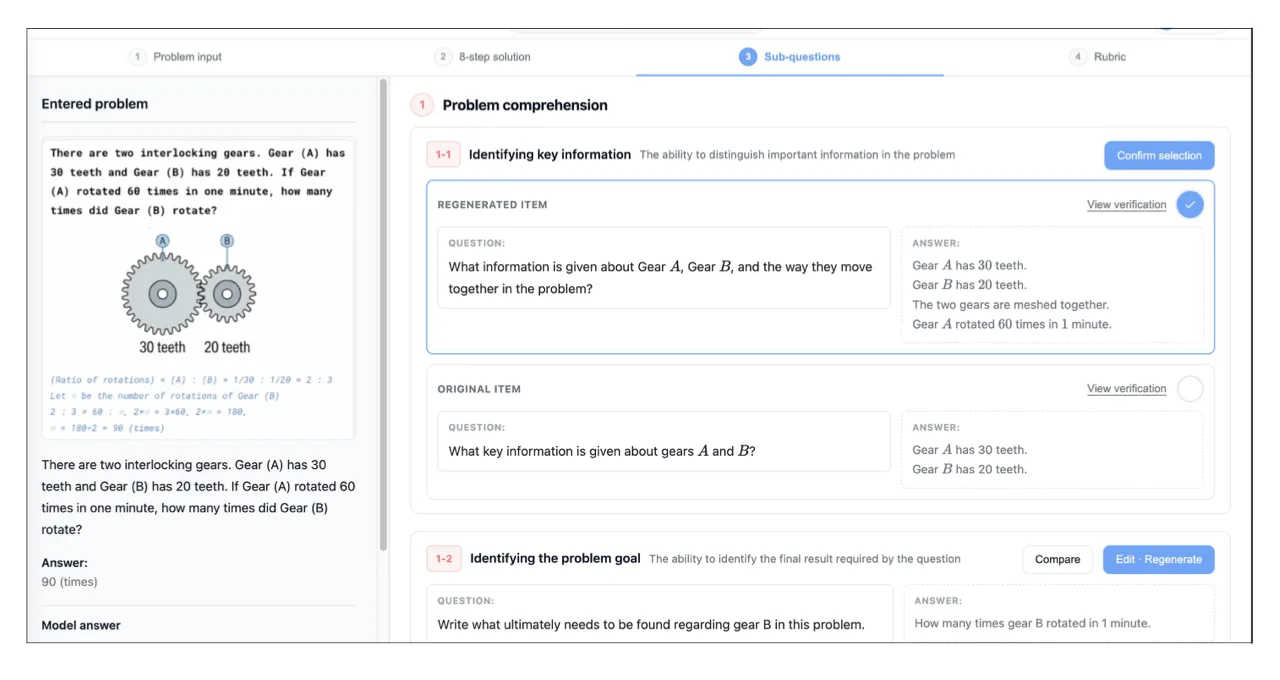
A teacher-in-the-loop system that makes students' math reasoning visible stage by stage. Given a word problem, it generates eight stage-specific sub-questions with three-tier rubrics for teachers to review, then scores student responses into a diagnostic report.
Diagnosing students' mathematical problem-solving skills at scale is challenging due to the difficulty of eliciting fine-grained reasoning and constructing problem-specific rubrics. We present STEPwise, a teacher-in-the-loop system that supports the full workflow of process-level diagnosis, from diagnostic material generation to student assessment. STEPwise is designed to make students' reasoning visible at each problem-solving stage and support structured, scalable process-level assessment in mathematics classrooms. STEPwise is grounded in STEP (STage-based Evaluation of Problem-solving skills), a diagnostic framework co-designed with six mathematics education experts that decomposes problem-solving into four stages and eight sub-skills. Given a math word problem, STEPwise automatically generates eight stage-specific sub-questions and corresponding three-tier rubrics using an LLM-based pipeline, which employs chain-of-thought problem solving, multi-verifier quality checking, and simulated student error generation. Teachers can review, edit, and provide feedback on all generated materials before deploying them to students. Once students submit responses, STEPwise scores them based on the rubrics and produces a diagnostic report summarizing each student's performance across reasoning stages.
-
CHICHI 25 LBW
LLMs often miss contextual nuance and user intent. Through participatory workshops with communication experts, designers, and end-users, we reinterpret the Gricean Maxims for human-LLM interaction and derive nine design considerations across interaction stages.
While large language models (LLMs) are increasingly used to assist users in various tasks through natural language interactions, these interactions often fall short due to LLMs' limited ability to infer contextual nuances and user intentions, unlike humans. To address this challenge, we draw inspiration from the Gricean Maxims--human communication theory that suggests principles of effective communication--and aim to derive design insights for enhancing human-AI interactions (HAI). Through participatory design workshops with communication experts, designers, and end-users, we identified ways to apply these maxims across the stages of the HAI cycle. Our findings include reinterpreted maxims tailored to human-LLM contexts and nine actionable design considerations categorized by interaction stage. These insights provide a concrete framework for designing more cooperative and user-centered LLM-based systems, bridging theoretical foundations in communication with practical applications in HAI.
-
EMNLPEMNLP 2024 Workshop on CustomNLP4U
How should we judge an LLM as an English writing tutor? We propose three pedagogy-grounded metrics for EFL essay feedback, evaluated both by EFL experts on feedback quality and by learners on their own learning outcomes.
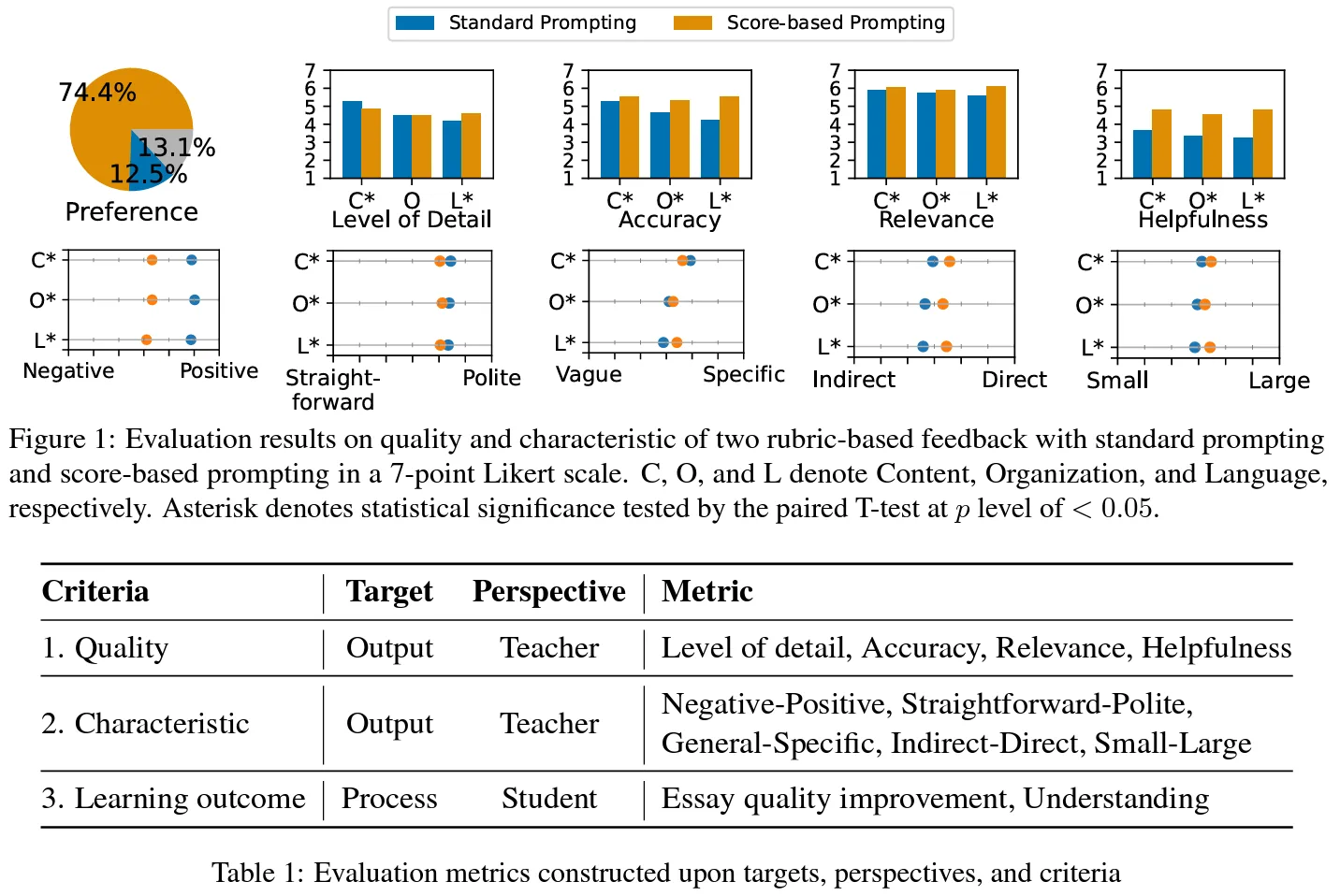
In the context of English as a Foreign Language (EFL) writing education, LLM-as-a-tutor can assist students by providing real-time feedback on their essays. However, challenges arise in assessing LLM-as-a-tutor due to differing standards between educational and general use cases. To bridge this gap, we integrate pedagogical principles to assess student-LLM interaction. First, we explore how LLMs can function as English tutors, providing effective essay feedback tailored to students. Second, we propose three metrics to evaluate LLM-as-a-tutor specifically designed for EFL writing education, emphasizing pedagogical aspects. In this process, EFL experts evaluate the feedback from LLM-as-a-tutor regarding quality and characteristics. On the other hand, EFL learners assess their learning outcomes from interaction with LLM-as-a-tutor. This approach lays the groundwork for developing LLMs-as-a-tutor tailored to the needs of EFL learners, advancing the effectiveness of writing education in this context.
-
EMNLPEMNLP 2024 Workshop on CustomNLP4U
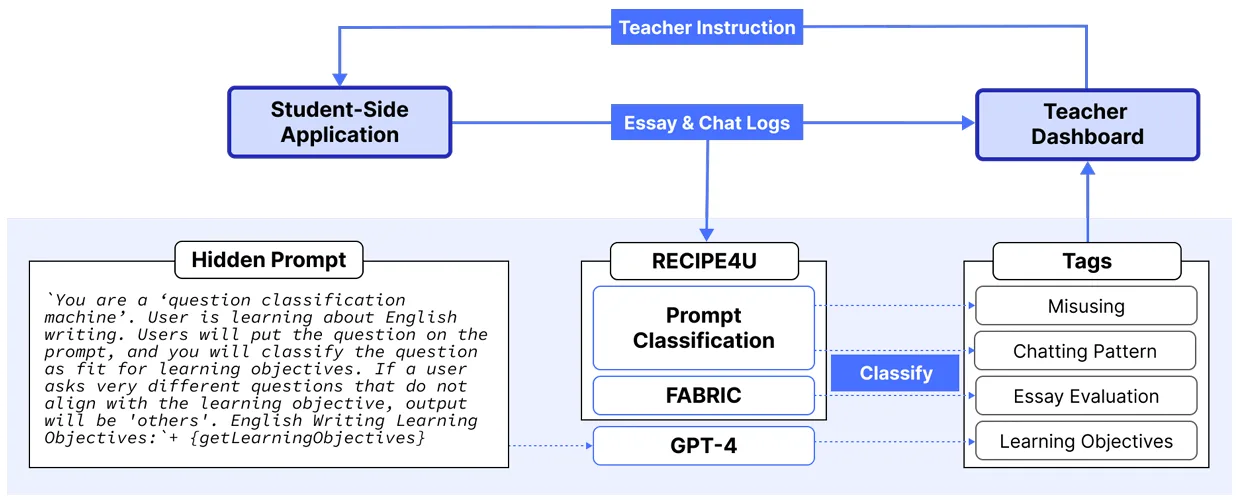
An LLM-powered dashboard that helps EFL writing teachers analyze how students interact with ChatGPT: monitoring behavior, flagging non-educational use, and aligning instruction with learning goals.
This paper presents the development of a dashboard designed specifically for teachers in English as a Foreign Language (EFL) writing education. Leveraging LLMs, the dashboard facilitates the analysis of student interactions with an essay writing system, which integrates ChatGPT for real-time feedback. The dashboard aids teachers in monitoring student behavior, identifying noneducational interaction with ChatGPT, and aligning instructional strategies with learning objectives. By combining insights from NLP and Human-Computer Interaction (HCI), this study demonstrates how a human-centered approach can enhance the effectiveness of teacher dashboards, particularly in ChatGPT-integrated learning.
-
L@SL@S 2024 WiP
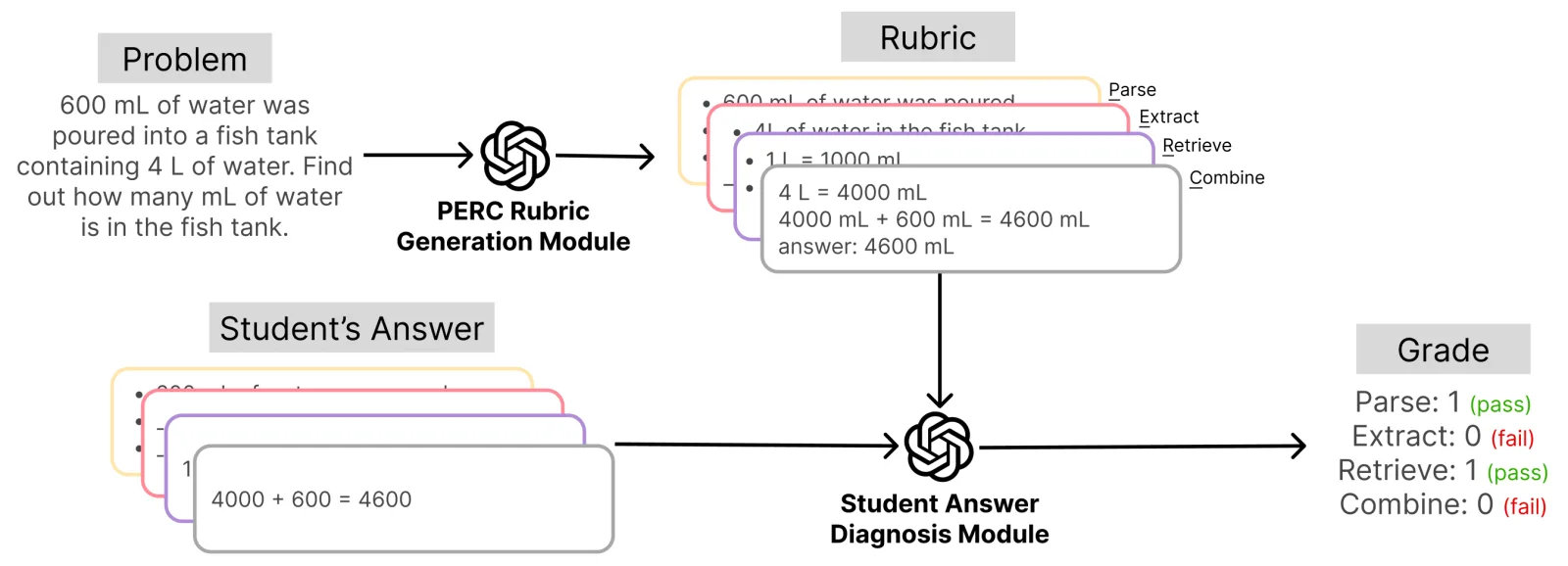
We propose PERC, a four-stage problem-solving framework (Parse, Extract, Retrieve, Combine), and an LLM pipeline that generates rubrics and diagnoses each stage of elementary students' math answers. Fine-tuned on collected student data, it showed promise in improving diagnosis accuracy over vanilla GPT-3.5 and GPT-4.
Personalized feedback, tailored to students' needs and prior knowledge, is essential for fostering mathematical problem-solving skills. However, personalized feedback is often limited to one-to-one tutoring or small classrooms as it requires instructors' in-depth diagnosis of cognitive processes employed in students' answers. We propose a large language model (LLM) pipeline that diagnoses students' problem-solving skills from their answers at scale in elementary school math word problems. Based on prior literature and an interview with a math education expert, we developed PERC, a framework composed of four problem-solving stages that students can follow: Parse, Extract, Retrieve, and Combine. The framework facilitates diagnosis by externalizing students' step-by-step problem-solving processes and allowing our pipeline to analyze each stage individually. Our LLM pipeline diagnoses each stage by (1) generating rubrics and (2) comparing students' answers with the rubrics. We fine-tuned our LLM pipeline with 71 math problem-rubric pairs and 128 problem-answer-grade triplets collected from elementary school students. We evaluated our pipeline's diagnosis accuracy against vanilla GPT-3.5 and vanilla GPT-4 with automatic and expert evaluations. The results showed the potential of our approach in improving the end-to-end diagnosis accuracy of LLMs, and expert evaluation provided specific aspects that should be improved.
-
CHICHI 2024 Workshop on Getting Back Together: HCI and Human Factors Joining Forces to Meet the AI Interaction Challenge
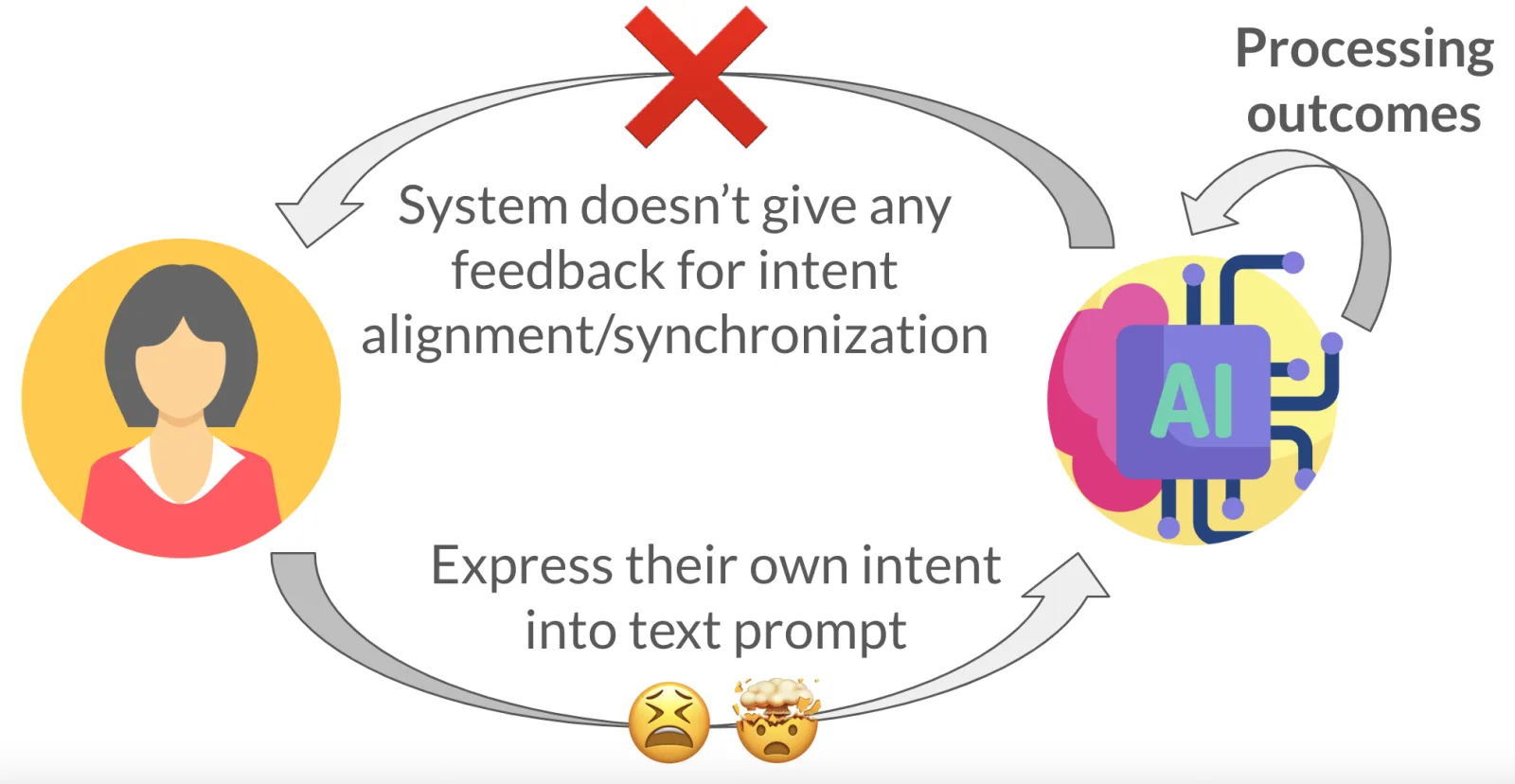
To help AI produce what users actually intend, we compare how people specify intent to other humans versus to LLMs, and identify human communication strategies that can inform the design of more intent-aligned AI systems.
AI intent alignment, ensuring that AI produces outcomes as intended by users, is a critical challenge in human-AI interaction. The emergence of generative AI, including LLMs, has intensified the significance of this problem, as interactions increasingly involve users specifying desired results for AI systems. In order to support better AI intent alignment, we aim to explore human strategies for intent specification in human-human communication. By studying and comparing human-human and human-LLM communication, we identify key strategies that can be applied to the design of AI systems that are more effective at understanding and aligning with user intent. This study aims to advance toward a human-centered AI system by bringing together human communication strategies for the design of AI systems.
-
L@SL@S 2023 WiP
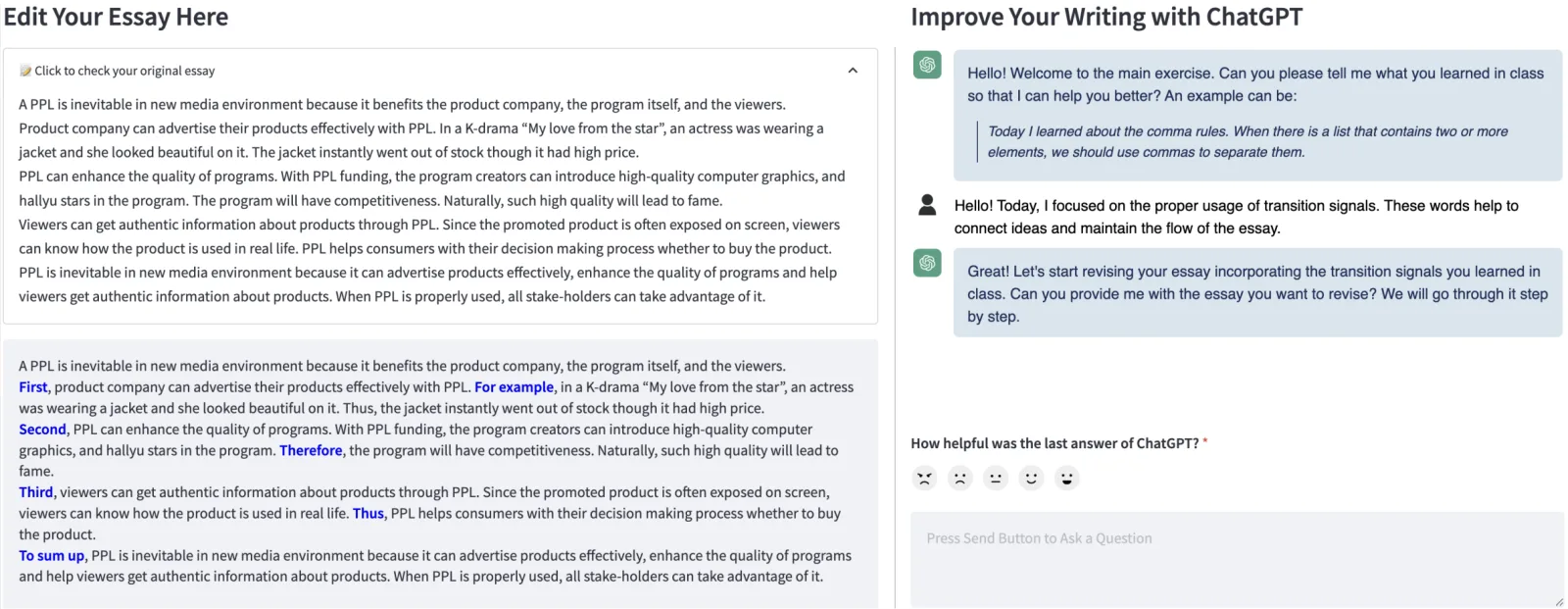
RECIPE brings ChatGPT into EFL writing courses through a hidden teacher-role prompt and student-initiated reflection. Deployed with 213 students and 7 instructors, it revealed how students use and perceive ChatGPT and surfaced design opportunities for generative AI in EFL education.
The integration of generative AI in the field of education is actively being explored. In particular, ChatGPT has garnered significant interest, offering an opportunity to examine its effectiveness in English as a foreign language (EFL) education. To address this need, we present a novel learning platform called RECIPE (Revising an Essay with ChatGPT on an Interactive Platform for EFL learners). Our platform features two types of prompts that facilitate conversations between ChatGPT and students: (1) a hidden prompt for ChatGPT to take an EFL teacher role and (2) an open prompt for students to initiate a dialogue with a self-written summary of what they have learned. We deployed this platform for 213 undergraduate and graduate students enrolled in EFL writing courses and seven instructors. For this study, we collect students' interaction data from RECIPE, including students' perceptions and usage of the platform, and user scenarios are examined with the data. We also conduct a focus group interview with six students and an individual interview with one EFL instructor to explore design opportunities for leveraging generative AI models in the field of EFL education.
-
KCCKCC 2023
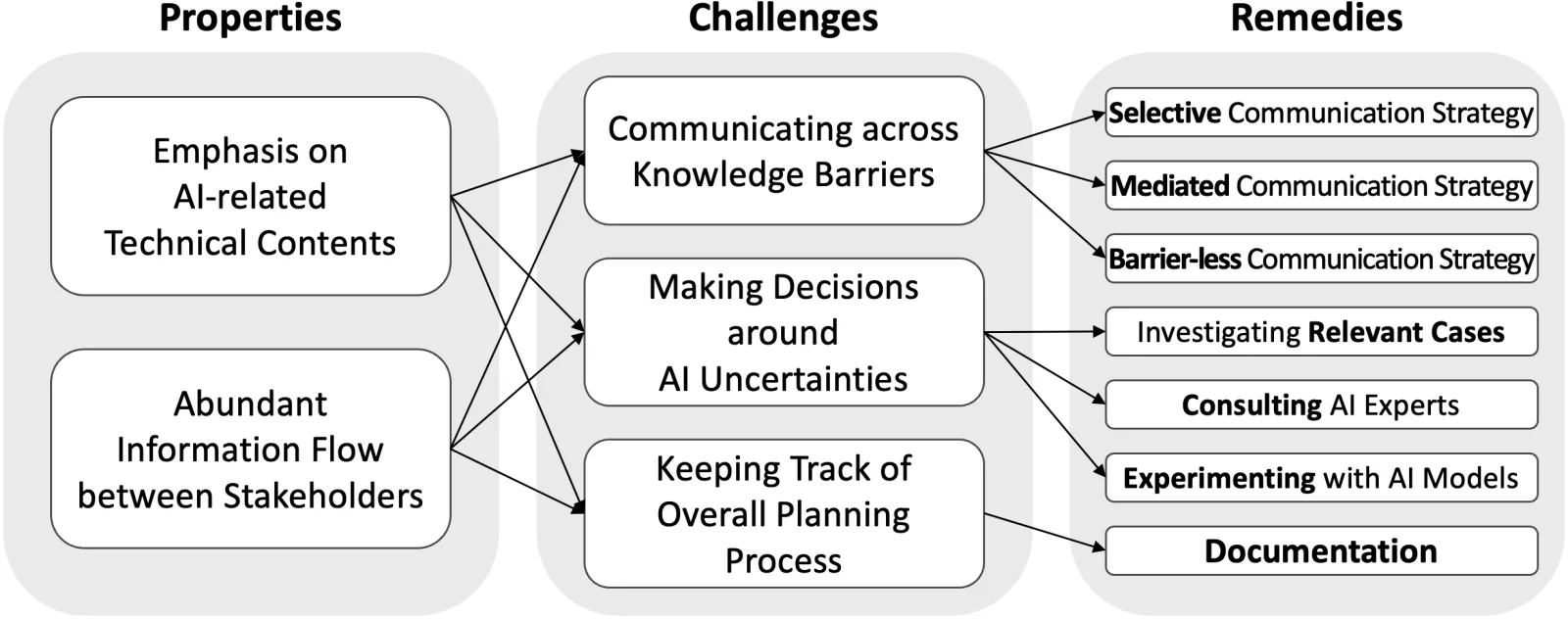
Many AI projects stall at the planning stage. Surveying 19 organizations, we found AI application planning is hampered by knowledge barriers, AI uncertainty, and difficulty tracking the process, and we distill how they cope into practical planning guidelines.
Despite the growing demand for AI application development, many efforts fail to yield successful AI applications due to many difficulties that arise during the collaboration of various stakeholders. In this work, we specifically focus on the planning stage to identify the challenges that arise early on and remedies for the challenges that are utilized in the real world. Through a survey of 19 organizations that have developed AI applications, we find that AI development planning is a stage with an emphasis on AI-related contents and abundant information flow between stakeholders. This leads to challenges in communicating across knowledge barriers, making decisions around AI uncertainties, and keeping track of the overall planning process. Organizations cope with knowledge barriers by either circumventing the barriers, communicating through a mediator, or investing resources to remove the barrier; they navigate the AI uncertainties by investigating relevant AI applications, consulting AI experts, and experimenting with the AI technology; they track the planning process by using structured documentation. Based on the various strategies for coping with the challenges, we propose guidelines on how organizations can apply our findings to their AI application planning processes.
-
UbiComp/ISWCUbiComp/ISWC '23 Adjunct
A live demo of AI-to-Human Actuation: showing how a visual AI's inference quality shifts with a person's conditions, and how proactive actuations can nudge people into conditions that make the AI more robust.
Imagine a near-future smart home. Home-embedded visual AI sensors continuously monitor the resident, inferring her activities and internal states that enable higher-level services. Here, as home-embedded sensors passively monitor a free person, good inferences happen inconsistently. The inferences' confidence highly depends on how congruent her momentary conditions are to the conditions favored by the AI models, e.g., front-facing or unobstructed. We envision new strategies of AI-to-Human Actuation (AHA) that boost the sensory AI's robustness by inducing favorable conditions from the person with proactive actuations. To demonstrate our concept, in this demo, we show how the inference quality of the AI model changes relative to the person's conditions and introduce possible actuations, used in our full paper experiments, that could drive more favorable conditions for visual AIs.

© 2026 Yoonsu Kim. Powered by Jekyll and Minimal Light theme.